UK announces sanctions on Houthis and four officials
The measures add a UK asset freeze to an existing UN arms embargo. A Treasury licence is intended to limit disruption to humanitarian aid and essential civilian supplies.
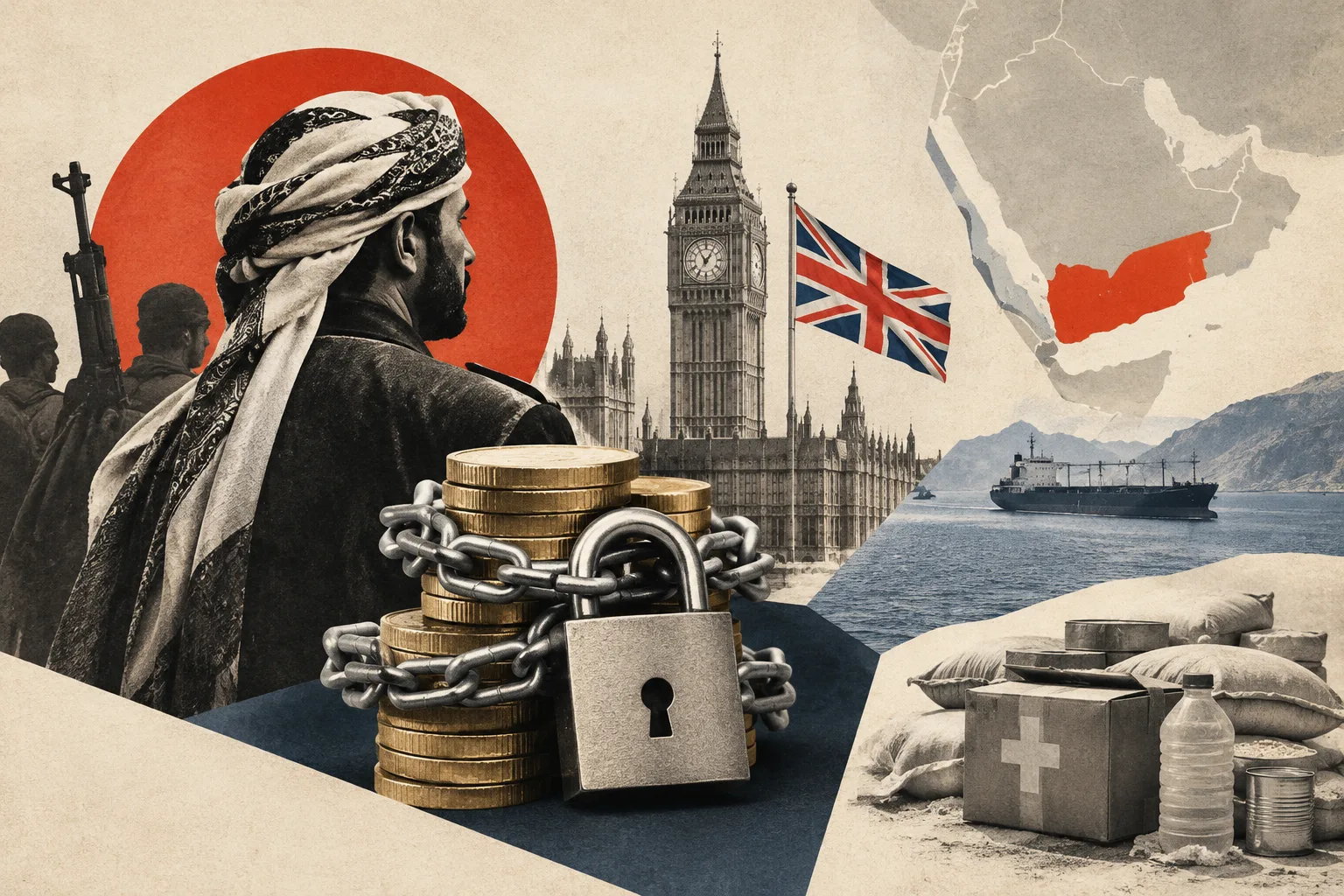
On 24 November, the UK government announced an asset freeze and company director disqualification against Yemen’s Houthi movement, Ansar Allah, and four officials. The individuals also face UK travel bans, the Foreign Office said.
The Office of Financial Sanctions Implementation (OFSI) says the movement was already subject to a UN arms embargo, but not a UN asset freeze. The new UK measures add the freeze and director disqualification.
The freeze generally bars UK nationals and businesses in the UK from dealing with assets owned, held or controlled by those designated, or making resources available to them or for their benefit. Exceptions and licences can apply.
The four officials named are Abdulkarim Amir al-Din Hussein Al-Houthi, Abdul Hakim Hashem Ali Al-Khaiwani, Mohammed Moufleh and Sarim Al-Din Muffadal. The Foreign Office alleges that detainees in facilities under Al-Houthi’s responsibility were tortured. It says Muffadal, a prosecutor, is reasonably suspected of committing, knowingly permitting or acquiescing in sexual violence, including rape, as well as torture and other mistreatment of women detainees.
The Foreign Office said the measures followed renewed fighting in Yemen and increased Houthi attacks on civilian infrastructure in Saudi Arabia that had caused deaths. It also said disruption to shipping through the Bab el-Mandeb Strait had put pressure on British household costs, without giving a figure for the effect.
Humanitarian permissions
The Treasury has issued a general licence alongside an existing humanitarian exception. OFSI says the licence adds permissions for humanitarian organisations not covered by the existing exception and for certain commercial supplies by UK providers to meet essential civilian needs.
These can include food, fuel and medicines. Supplies must be necessary for civilian needs and not exclusively for military or government use, OFSI says; the licence does not permit unrestricted trade. Transactions involving the Houthis are not automatically excluded if they meet the conditions, although the arms embargo still applies.
The permissions also cover related insurance, payments and financial services. Personal remittances from the UK to an individual in Yemen are permitted for personal or household use, provided neither sender nor recipient is a designated person.
A licence permits activity but does not compel other parties to take part, OFSI has said in general guidance.
Sign in to give this article a thumbs up or down.
From the discussion
Private test discussion. Comments are readers’ views and are not yet automatically fact-checked. Editing is available for 60 seconds after posting.
Sign in with a confirmed reader account and choose a username to read comments and participate.
Sorting applies to top-level comments; replies remain oldest first. New comments and likes can change the order. Refresh for the current ranking.
Loading comments…