UK watchdog bans five Voy testosterone test adverts over misleading claims
The UK advertising watchdog found that some of the adverts exaggerated links between common symptoms and low testosterone. It also rejected a claim that one in four men over 30 had low levels.
Review information is loading.
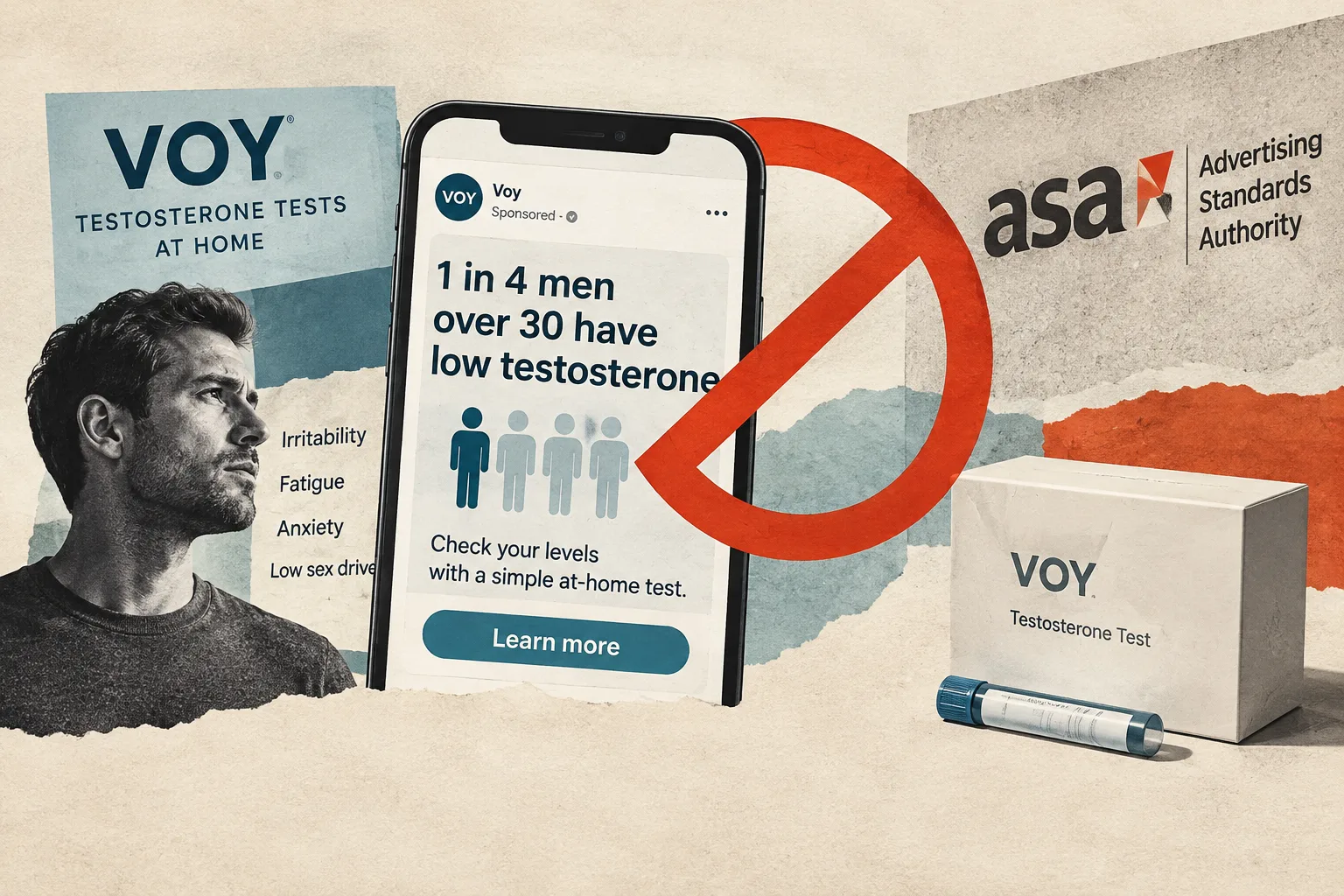
The Advertising Standards Authority (ASA) has ruled that three posters and two paid-for Facebook adverts for Voy’s at-home testosterone tests must not appear again in their current form. The adverts were seen in January.
The regulator said three posters exaggerated the link between low testosterone and either irritability or fatigue when each was mentioned on its own. One Facebook advert also exaggerated the connection with anxiety and presented low testosterone as a definitive diagnosis for symptoms, it said.
A separate Facebook advert claimed that low testosterone “sneaks up on 1 in 4 men over 30”. The ASA found that claim misleading and insufficiently supported, although it did not object to how the same advert presented symptoms.
Voy argued that its adverts used deliberately conditional language and presented low testosterone as a possible explanation, rather than a definite cause. It also disputed the regulator’s assessment of the one-in-four claim, saying it referred to low testosterone levels, not a diagnosis of testosterone deficiency.
The company cited a US study in which 24% of the men studied had total testosterone below a specified threshold. But the ASA said the group was not representative of all men over 30: men without initial symptoms had been excluded. It also said that, in the context of the advert, consumers would understand the claim to mean one in four had low testosterone with symptoms likely to benefit from treatment. Only 5.6% of the study group met the study’s criteria for symptomatic testosterone deficiency.
The ASA examined six adverts in total. It did not ban a fourth poster about low sex drive, saying that symptom was sufficiently linked to testosterone levels in the context of the advert.
Voy told the BBC it had withdrawn the adverts during the investigation and would not run them again. Its chief medical officer, Dr Earim Chaudry, said patient decisions were led by clinicians and the company kept its advertising under review.
The ruling does not ban testosterone tests or services. The ASA said they can still be advertised, provided the claims are accurate and supported by evidence.
Sign in to give this article a thumbs up or down.
From the discussion
Private test discussion. Comments are readers’ views and are not yet automatically fact-checked. Editing is available for 60 seconds after posting.
Sign in with a confirmed reader account and choose a username to read comments and participate.
Sorting applies to top-level comments; replies remain oldest first. New comments and likes can change the order. Refresh for the current ranking.
Loading comments…