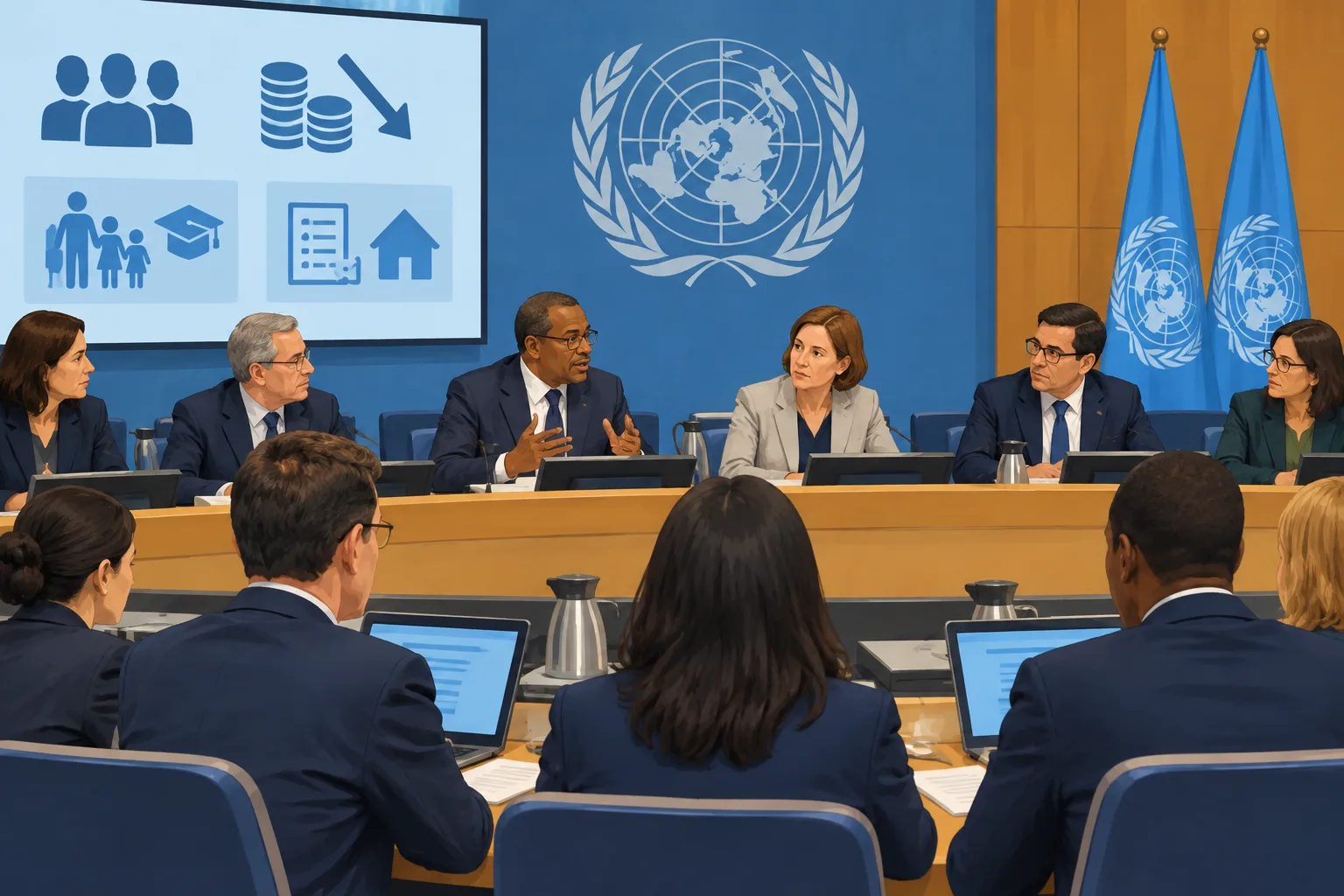
UN delegates debate staff pay and retention as cost-cutting continues
UN delegates debated how to retain skilled staff while restraining costs, as unions raised concerns about a proposed New York salary freeze and possible losses in staff purchasing power.
Review information is loading.
United Nations delegates have debated how to keep the organisation attractive to skilled staff while controlling costs, with union representatives warning that proposed pay restraint and the loss of colleagues could undermine recruitment and morale.
At a meeting of the General Assembly’s Fifth Committee on 16 November, speakers reviewed the International Civil Service Commission’s 2026 report on staff pay, benefits and working conditions. The discussions come as the UN pursues cost-cutting and reforms under its UN80 initiative.
The European Union called for a lower margin used to compare UN net salaries with those of other employers, saying the Assembly should act now rather than defer a decision for two years. The United States also criticised the delay, arguing that a lack of recruitment and retention data should not indefinitely prevent a policy decision. Uruguay, speaking for the Group of 77 and China, urged an evidence-based assessment, including analysis of budget effects and the impact on attracting and retaining staff.
Staff representatives focused on the effects of possible restraint. Imed Zabaar, president of the Federation of International Civil Servants’ Associations, urged the committee to reconsider a recommendation to freeze salaries in New York until December 2028. Karin Esposito, president of the United Nations International Civil Servants Federation, said a possible freeze in the net remuneration margin could permanently reduce purchasing power. Nathalie Meynet, who leads the Coordinating Committee for International Staff Unions and Associations of the UN System, warned that staff could not indefinitely make up for the loss of colleagues, expertise and resources through their dedication.
The commission’s recommendations cover areas including family and education support, mobility, field arrangements, teleworking and rental subsidies. Its chair, Larbi Djacta, said they would generally aim to take effect from 1 July 2027. The commission also proposed a 1.24 per cent adjustment to the base salary scale from 1 January 2027, offset by a corresponding reduction in post adjustment, leaving net remuneration unchanged.
Delegates also discussed the UN Joint Staff Pension Fund. Its market value stood at $111.2 billion on 30 September 2026, up from $107.7 billion at the end of 2025, according to the fund’s representative. Uruguay, again speaking for the Group of 77 and China, welcomed the fund’s financial position while calling for continued vigilance.
Sign in to give this article a thumbs up or down.
About this discussion and AI questions
Private test discussion. Comments are readers’ views and are not yet automatically fact-checked. Editing is available for 60 seconds after posting.
Sign in with a confirmed reader account and choose a username to read comments and participate.
Sorting applies to top-level comments; replies remain oldest first. New comments and likes can change the order. Refresh for the current ranking.
Loading comments…