UN expert urges shift from ‘war economies’ as rights body warns of funding constraints
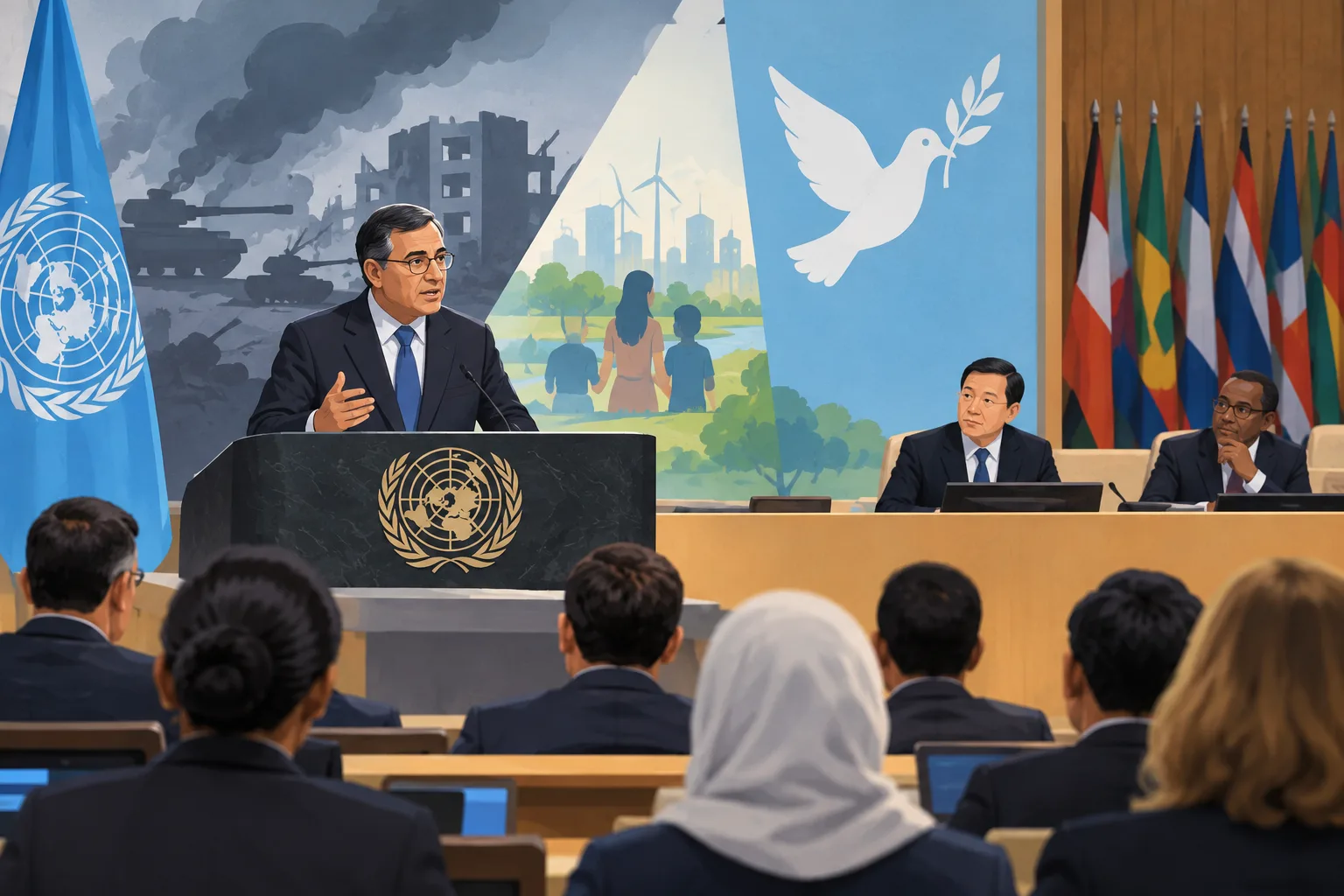
A UN expert has called for a shift from investment in conflict towards peace, while the Human Rights Council’s president warned that funding constraints are affecting the body’s work. Delegates also clashed over the Council’s country-specific mandates.
Review information is loading.
A United Nations expert has urged governments and companies to move investment away from what he called “war economies” and towards peace, as the Human Rights Council’s president warned that funding constraints are hampering the body’s work.
Surya Deva, the UN Special Rapporteur on the right to development, told the General Assembly’s Third Committee that global military spending reached about $2.9 trillion in 2025. He said 65 state-based conflicts were recorded across 35 countries that year, the highest number since the Second World War, and argued that “more weapons do not mean more peace”.
Deva said some states and companies profit from conflict, including through arms, technology and construction. He called for stronger preventive diplomacy and early-warning systems, accountability for international crimes and reform of the Security Council. His proposal for a peace economy, he said, should also address social injustice and the grievances of people left behind.
The meeting also heard renewed calls to make the right to development legally binding. Zamir Akram, chair-rapporteur of the Working Group on the Right to Development, said a proposed covenant should move from draft to adoption by the General Assembly. He said UN budget constraints had cut the working group’s meeting time to four days, preventing it from engaging with several experts.
The Human Rights Council’s president, Sidharto Reza Suryodipuro, said the Council had adopted 100 resolutions, held one special session and convened three urgent debates. He called for adequate, predictable funding and greater support for participation by least developed countries and small island states, as well as safe and open participation by civil society.
Delegates disagreed over the Council’s country-specific mandates. Nordic-Baltic countries and Uruguay warned that cuts and underfunding could weaken human-rights monitoring and responses to urgent situations. China, Venezuela and Cuba criticised mandates imposed without a state’s consent; Israel accused the Council of lacking universality and called for the end of specific mandates relating to Israel and the Occupied Palestinian Territory.
The debate follows an earlier General Assembly discussion on the Council’s annual report, where speakers also raised concerns about funding and protection of human rights. The earlier debate included sharply competing accounts of conflicts and the Council’s work.
Sign in to give this article a thumbs up or down.
About this discussion and AI questions
Private test discussion. Comments are readers’ views and are not yet automatically fact-checked. Editing is available for 60 seconds after posting.
Sign in with a confirmed reader account and choose a username to read comments and participate.
Sorting applies to top-level comments; replies remain oldest first. New comments and likes can change the order. Refresh for the current ranking.
Loading comments…