US Army detonates degraded lead azide stockpile at Iowa ammunition plant
The US Army has detonated a degraded stockpile of lead azide in Iowa, saying it could otherwise explode without warning. The operation came amid concerns about the possible spread of toxic lead dust.
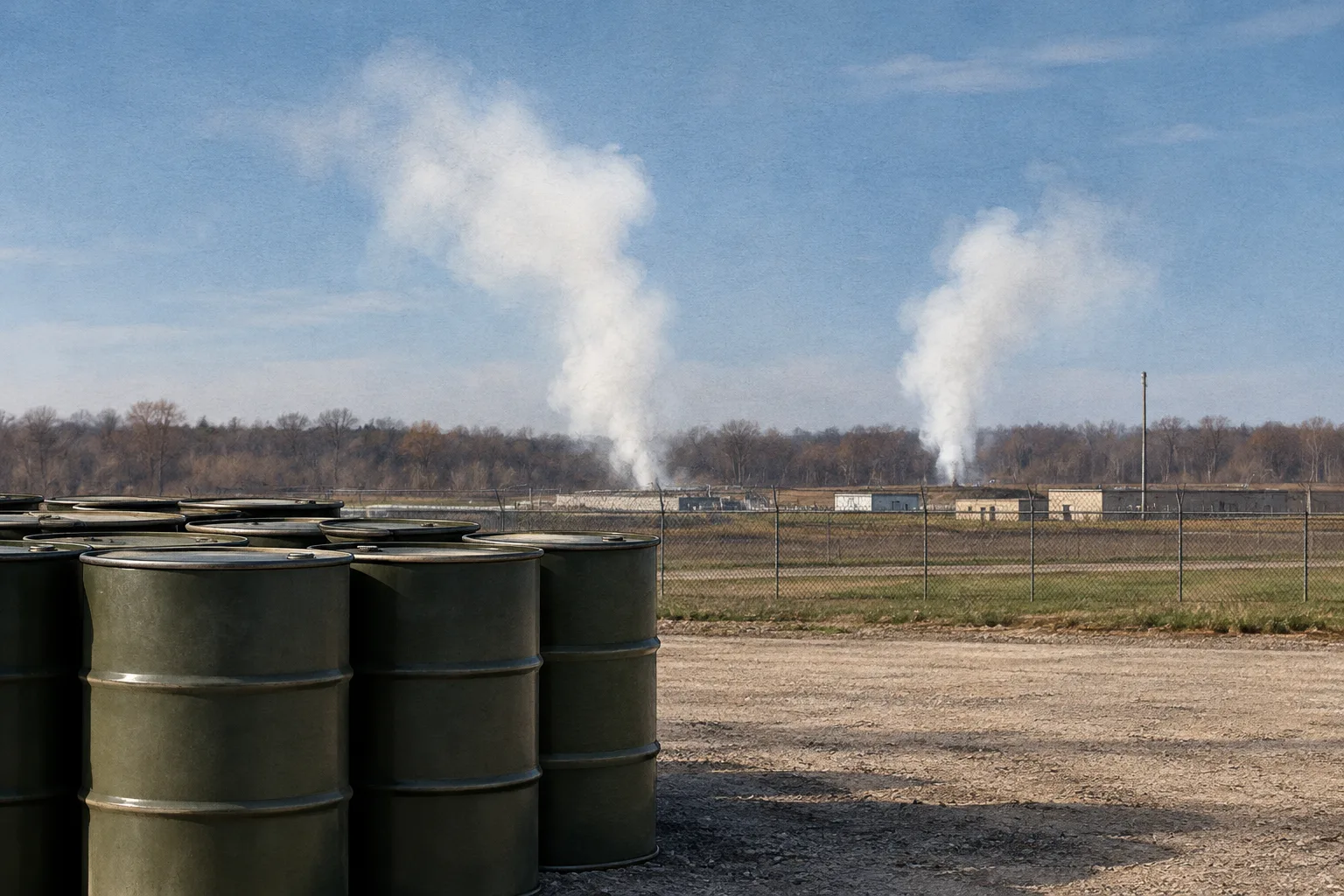
The controlled explosion took place at the Iowa Army Ammunition Plant on 25 November. The stockpile comprised 68 barrels holding approximately 4,300kg of lead azide, Chemical & Engineering News reported before the blast. That figure is the weight of the compound, not the amount of lead released into the air.
The operation followed an earlier plan to detonate the stockpile, which prompted a school closure and concerns about lead-containing dust. Video footage showed two white plumes above the site that quickly dispersed, the Associated Press reported. Their appearance alone does not establish how much lead was released.
Lead azide is a highly sensitive compound of lead and nitrogen used to trigger other explosives in munitions. It can explode when dry and is sensitive to heat, shock and friction. Lead exposure can damage the brain, nervous system and other organs, and cause developmental harm.
The Army said an inspection in March found that the decades-old stockpile had partly crystallised, making it more sensitive to friction, shocks and cold temperatures and increasing the risk of an uncontrolled explosion. It said a team had considered chemical treatment, heating, moving the material and continued storage, but judged each too dangerous after testing and safety reviews.
Jörg Stierstorfer, a chemist who studies explosives, told Chemical & Engineering News that chemical disposal requires opening the drums to dissolve or thoroughly wet the material. If that cannot be done safely, he said, controlled detonation is a viable and safe option.
Before the blast, the Army Independently verifiedPublic Safety Advisory: Controlled, Mitigated Detonation of Unstable Lead Azide at Iowa Army Ammunition Plant | Article | The United States Army and immediately surrounding affected areas, with a five-mile (8km) zone extending south-west of the plant. It advised residents outside the zone to shelter indoors and close windows and doors.
An appeals court rejected an environmental group’s emergency request and lifted a temporary hold on the permit on 23 November, ABC News reported.
The Army said it had prepared sand-filled barriers, a water wall, gel blocks and foam to limit the spread of particles. Before the blast, atmospheric chemist Delphine Farmer told Chemical & Engineering News that the precautions were designed to limit the movement of lead particles but would not be perfect. Particle size and weather would affect how far the dust travelled and in which direction, she said.
The Army said government personnel would conduct post-detonation sampling and publish results when available. University of Iowa researchers also described plans for independent air measurements and soil and surface samples.
Sign in to give this article a thumbs up or down.
From the discussion
Private test discussion. Comments are readers’ views and are not yet automatically fact-checked. Editing is available for 60 seconds after posting.
Sign in with a confirmed reader account and choose a username to read comments and participate.
Sorting applies to top-level comments; replies remain oldest first. New comments and likes can change the order. Refresh for the current ranking.
Loading comments…