What Congress can do about gerrymandering – and what the Supreme Court has left open
Congress has room to regulate how its electoral districts are drawn, but the Supreme Court has not guaranteed that any particular anti-gerrymandering law would survive a challenge.
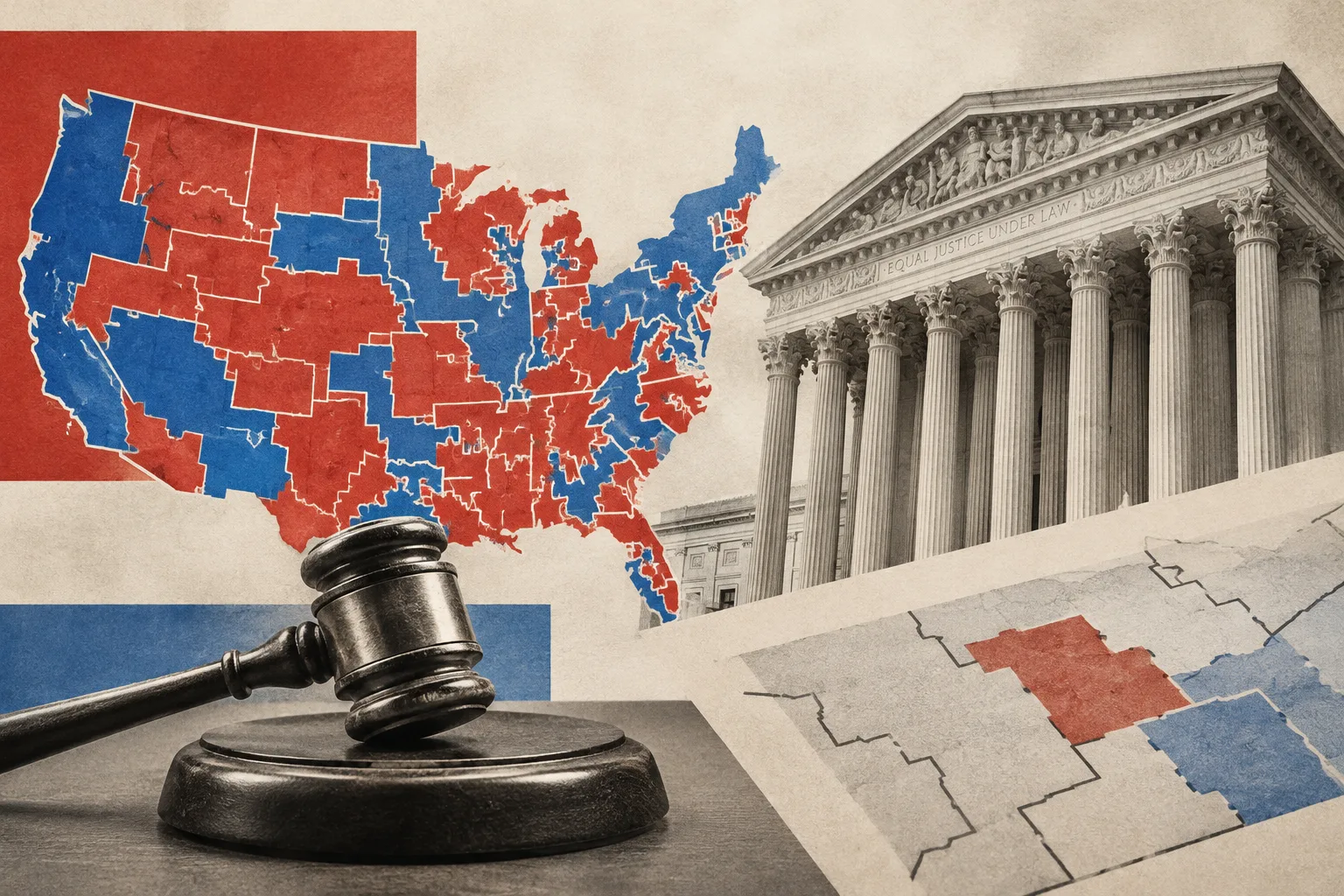
Congress could set rules to limit partisan gerrymandering in US congressional elections, even though the Supreme Court has closed one route for challenging it in federal court. Any new law’s prospects would depend on its wording and the elections it covered.
Gerrymandering involves drawing electoral boundaries to give a group an advantage. In partisan cases, mapmakers can concentrate opponents’ voters in a few districts or spread them across many, reducing their ability to win seats.
In its 2019 ruling in Rucho v. Common Cause, the Supreme Court said federal courts could not decide constitutional claims of partisan gerrymandering: the majority found no manageable legal standard for judges to apply. But it said Congress had power under the Constitution’s Elections Clause to act, while expressly declining to approve the proposals it mentioned.
The Congressional Research Service has suggested race-neutral standards for congressional maps as one possible response. It noted that proposals have included independent redistricting commissions and a ban on redrawing maps in the middle of a decade. In her dissent in Rucho, Justice Elena Kagan questioned whether politicians who benefit from partisan gerrymandering would be willing to change it.
Race and voting rights
The court treats racial gerrymandering differently. When race is the predominant factor in drawing a map, courts apply strict scrutiny: the government must show the map is narrowly tailored to serve a compelling interest. That is not a ban on every consideration of race.
In April 2026, the Supreme Court ruled that a Louisiana congressional map with a second majority-Black district was an unconstitutional racial gerrymander. The majority said Section 2 of the Voting Rights Act did not require that district and therefore did not justify the state’s use of race in drawing it.
The majority also narrowed the test for claims that district maps dilute minority voting power under Section 2. It said the evidence must support a strong inference that a state intentionally gave minority voters less opportunity because of their race, although a separate finding of intent was not required.
Section 2 was not struck down entirely. The court said compliance with the provision, as it interpreted it, could still provide a compelling reason for race-based districting in some circumstances. Kagan, dissenting, argued that the new requirements would make vote-dilution claims exceptionally difficult to win.
Writing for MS NOW, legal analyst Jordan Rubin says the current court would likely be sceptical of further efforts to protect minority voting rights. How it would rule on a future measure remains a separate question.
Sign in to give this article a thumbs up or down.
From the discussion
Private test discussion. Comments are readers’ views and are not yet automatically fact-checked. Editing is available for 60 seconds after posting.
Sign in with a confirmed reader account and choose a username to read comments and participate.
Sorting applies to top-level comments; replies remain oldest first. New comments and likes can change the order. Refresh for the current ranking.
Loading comments…