US school phone pouches linked to small test gains in Harvard study
A Harvard-led study found a modest improvement in test-score growth at schools using lockable phone pouches. Earlier research found an average effect close to zero.
Review information is loading.
Researchers at Harvard’s Center for Education Policy Research examined test data from approximately 3.3 million pupils at 4,600 US schools between the 2021–22 and 2025–26 school years. They compared schools that introduced lockable Yondr phone pouches with similar schools that did not use them; some comparison schools had other phone restrictions.
Most schools in the sample were comparison schools. The maths analysis included 677 schools using pouches, while the reading analysis included 814.
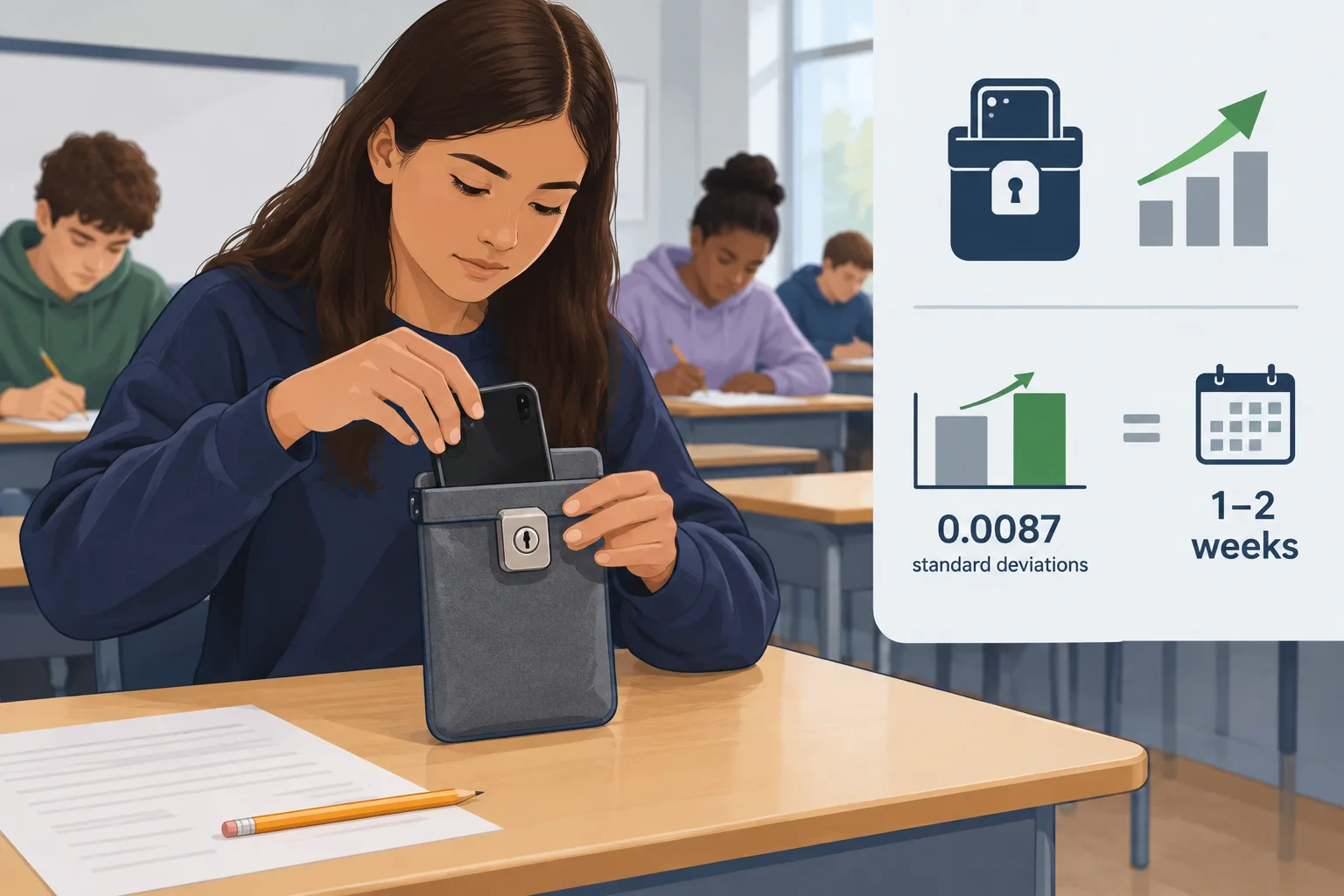
Combining the two subjects, the researchers estimated additional annual test-score growth of 0.0087 standard deviations, a small difference. They compared the rounded result with typical progress across a school year and described it as equivalent to one to two weeks of learning. That is a conversion of the test-score difference, not a measurement of extra teaching time.
The combined result met a conventional threshold for statistical significance, but the separate estimates for maths and reading did not. When the researchers included scores they had excluded because they showed extreme changes, the combined estimate was smaller and no longer met that threshold.
An earlier National Bureau of Economic Research working paper, published in April and revised in September, also studied Yondr pouches. It found that the average difference in test scores across middle and high schools was close to zero in the first three years after adoption. It found modest positive results in high-school maths and small negative results in middle schools, although the overall difference between the two school levels was not statistically significant.
The studies used different measures: the Harvard team tracked individual pupils’ growth on the same test, while the earlier study used school averages from different state tests. Neither was a randomised trial, so other differences between schools could affect the results.
The Harvard researchers say small gains could accumulate if they persist. Thomas Dee, a Stanford researcher who co-authored the earlier study, told Associated Press he was not comfortable making that projection from estimates that were “small, sensitive and based on just a few years of phone bans”.
Sign in to give this article a thumbs up or down.
From the discussion
Private test discussion. Comments are readers’ views and are not yet automatically fact-checked. Editing is available for 60 seconds after posting.
Sign in with a confirmed reader account and choose a username to read comments and participate.
Sorting applies to top-level comments; replies remain oldest first. New comments and likes can change the order. Refresh for the current ranking.
Loading comments…