US voters wary of Big Tech, but its role in the 2028 election remains uncertain
More than half of voters questioned in a 2026 election survey said AI and data centres were crucial or a major factor in their congressional vote. The cost of living was more often rated crucial.
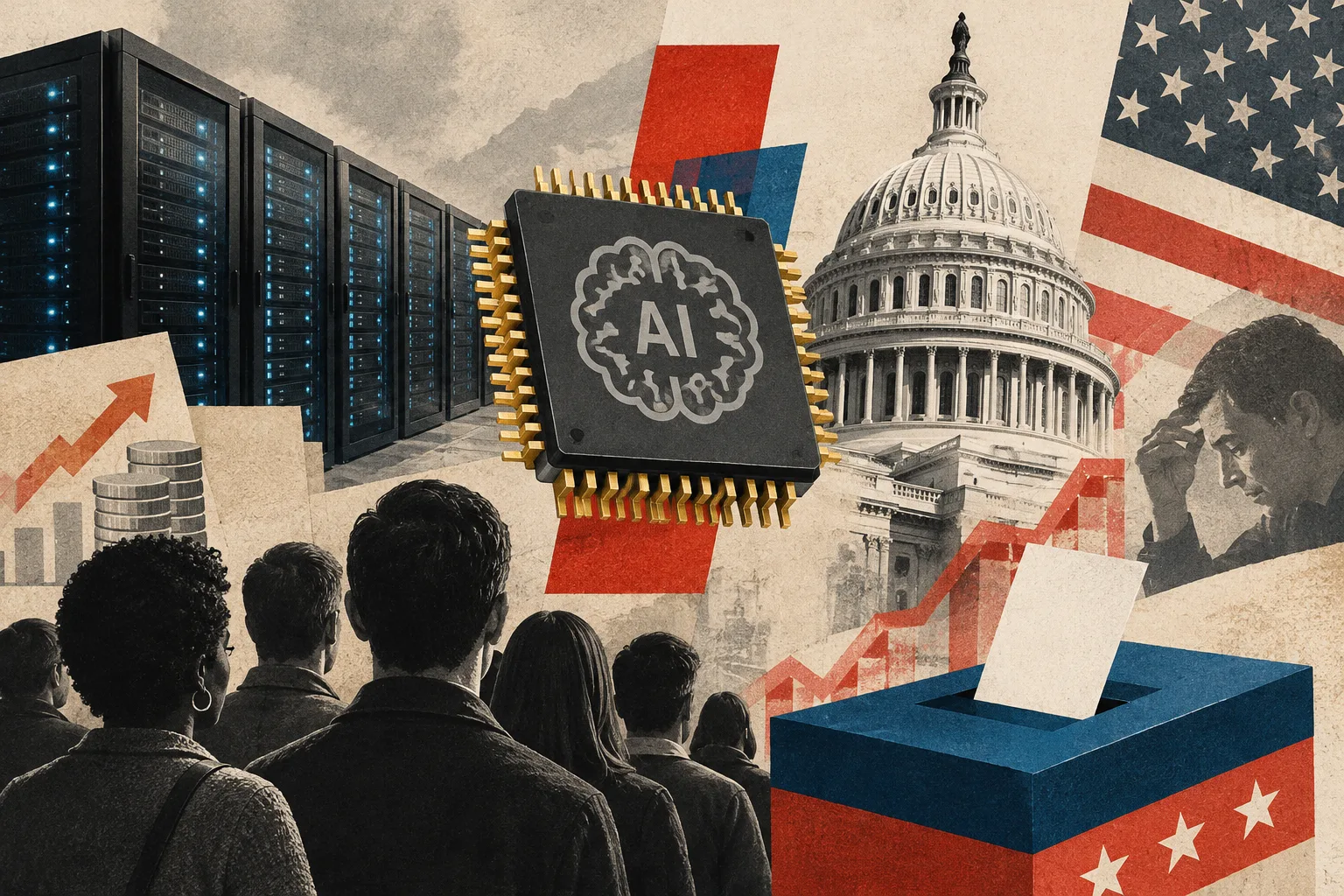
CNN political analyst Aaron Blake argues that concerns about artificial intelligence, data centres and recent technology outages could make large technology companies a political target ahead of the 2028 presidential election. The polling shows a potential issue for candidates, but does not establish what will determine votes two years from now.
In the joint election survey conducted by SSRS, 23% of respondents called AI and data centres crucial to their vote for Congress, while another 33% called them a major factor. By comparison, 49% described the cost of living as crucial. Respondents could rate more than one issue as crucial; the answers do not identify a single decisive reason for voting.
Asked which party was better able to handle AI, 30% chose Democrats and 26% Republicans; 43% chose neither.
Public confidence in large technology companies has fallen. Gallup found in June that 41% of US adults had very little or no confidence in them, up from 32% in 2025. A further 38% had some confidence, while 20% had a great deal or quite a lot. Confidence in US institutions more broadly was also near historic lows.
A separate Fox News poll in June asked registered voters to choose which posed the greater potential threat to the country’s future: big government or big technology companies. It found 52% chose technology and 47% government; in 2019, the figures were 35% and 58% respectively. The interviewing methods differed, and the 2026 questionnaire pressed people who answered ‘both’ or ‘neither’ to choose.
The same poll found 67% of registered voters opposed building an AI data centre in their area.
Job concerns have grown on another measure. In an August Gallup survey of 507 full- or part-time workers, 27% said they worried technology would make their job obsolete and 72% did not. The worried share was 13% in 2017, although the earlier question also included the word ‘unnecessary’.
Views are not moving in just one direction. Asked for their first reaction to AI in the Fox poll, 10% gave a response categorised as afraid, scared or dangerous, down from 16% in 2023. Responses categorised as innovative, helpful or useful rose from 7% to 14%.
An October poll by ABC News, The Washington Post and Ipsos found 57% of adults thought AI was bad for society and 42% thought it was good. Asked about its effect on them personally, respondents were almost evenly divided: 50% good and 49% bad.
Recent outages have disrupted Microsoft services, banking and air travel. The US government and the companies involved say there is no evidence the incidents were linked or caused by a cyberattack; Microsoft said its outage did not stem from AI or AI agents. The SSRS election survey ended before those disruptions.
Sign in to give this article a thumbs up or down.
From the discussion
Private test discussion. Comments are readers’ views and are not yet automatically fact-checked. Editing is available for 60 seconds after posting.
Sign in with a confirmed reader account and choose a username to read comments and participate.
Sorting applies to top-level comments; replies remain oldest first. New comments and likes can change the order. Refresh for the current ranking.
Loading comments…