News Made Clear · Loading…
Category
Regions
Continents
Topics
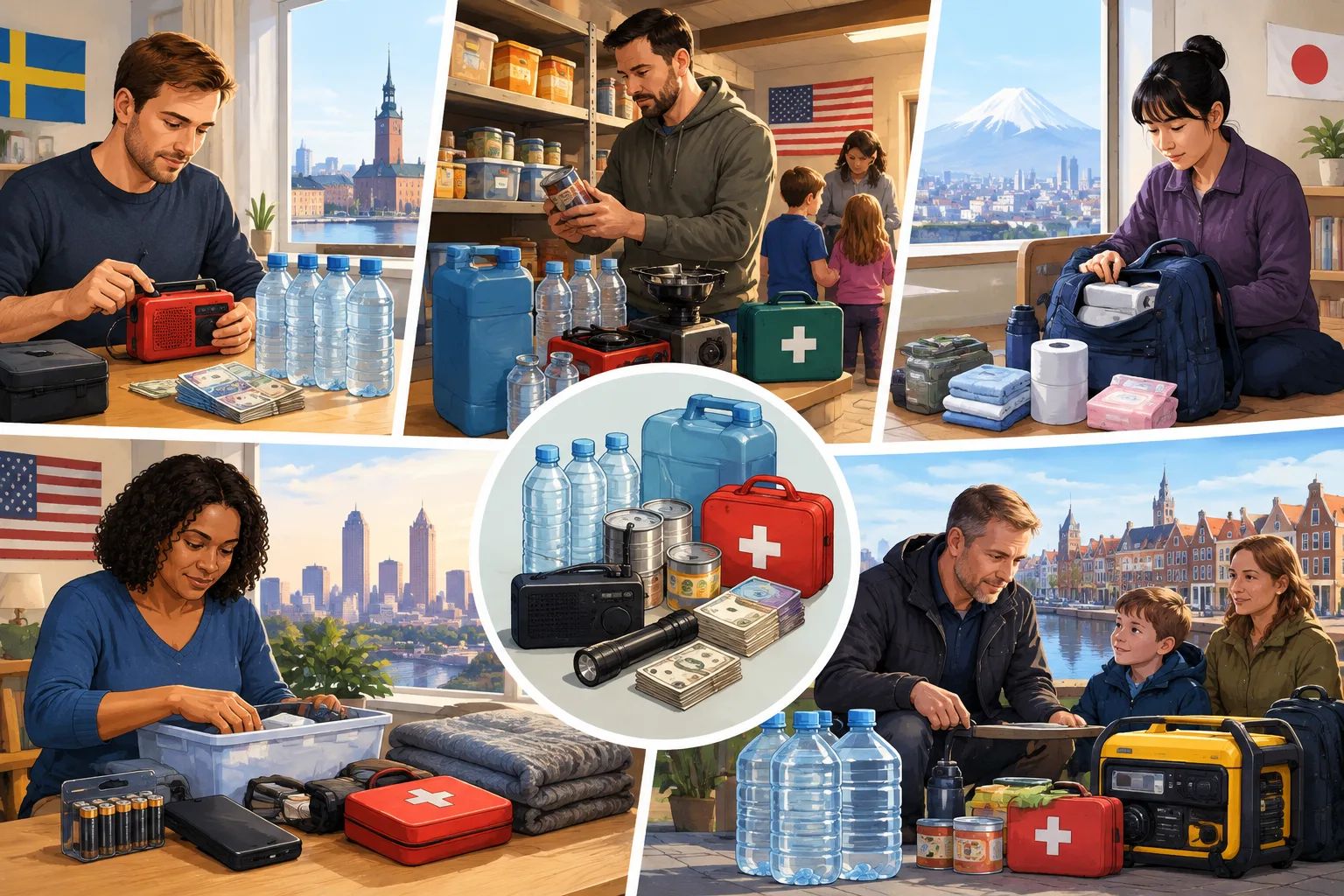
How households in four countries are preparing for emergencies
Loading statistics…
Households in four countries describe how they are preparing for emergencies, from keeping water and cash to rotating food stocks and checking emergency bags each year. Their accounts show how official advice becomes personal, and sometimes costly, household routines.
Review information is loading.
People in Sweden, the United States, Japan and the Netherlands are building household emergency supplies, from modest stores of water and cash to months of food and equipment for power cuts. Their experiences show how preparedness advice is being put into practice — and how differently households approach it.
Andreas Wennerberg, 30, in Stockholm, began preparing after a government booklet was delivered to Swedish homes two years ago. He has a hand-crank radio, 10 litres of water and about 2,230 Swedish kronor (£170) in cash, some of which he already owned. He says the advice was a “wake-up call”, although he has not followed it in full and is “not that worried”.
In Maryland, physiotherapist Dan C, 38, has spent about $6,000 (£4,470) on supplies since becoming a father. A winter power cut that left his family without electricity for two days exposed gaps in his preparations, he says. He now keeps about three months’ worth of food for his family of four, alongside water, a camping stove and medical supplies. He uses and replenishes food in what he calls a “rotating pantry”.
The US Federal Emergency Management Agency advises households to assemble an emergency kit, make a family plan and learn how to respond to different incidents. Dan says preparation can become catastrophising, but sees his own efforts as part of being a responsible homeowner.
Tokyo resident Ayumi T, 27, has kept an emergency bag for years, adding to it after a 2024 earthquake killed hundreds of people and caused widespread damage on Japan’s Noto Peninsula. Her bag includes clothes, towels, menstrual products and a disposable toilet. Her family checks its supplies each new year and replaces items such as out-of-date food.
In Atlanta, leadership coach Nicole Bonds, 48, says concern about severe weather has been on her mind for five years. She buys items gradually to keep the cost manageable, including batteries, a power bank, first-aid supplies, blankets and hygiene products.
Michael Stuut, 39, of Hoorn in the Netherlands, keeps about 120 litres of water, cash, a first-aid kit and a generator, as well as food and power equipment. He says his wife was initially unconvinced but now understands why he prepares. Their five-year-old son has been told the supplies are for times when the family does not want to go to the shops.
Dutch authorities launched a campaign in late 2025 advising households to keep 72 hours’ worth of supplies. The Netherlands has since launched a separate campaign encouraging people to make emergency plans as well as assemble a kit; its advice includes arranging who could help with childcare or assist a neighbour
How do we know?
1 listed sources · explore evidence, limitations and provenance.
Sign in to give this article a thumbs up or down.
About this discussion and AI questions
Private test discussion. Comments are readers’ views and are not yet automatically fact-checked. Editing is available for 60 seconds after posting.
Sign in with a confirmed reader account and choose a username to read comments and participate.
Sorting applies to top-level comments; replies remain oldest first. New comments and likes can change the order. Refresh for the current ranking.
Loading comments…