News Made Clear · Loading…
Category
Regions
Continents
Topics
The people finding clothes, shampoo and household goods in commercial bins
Loading statistics…
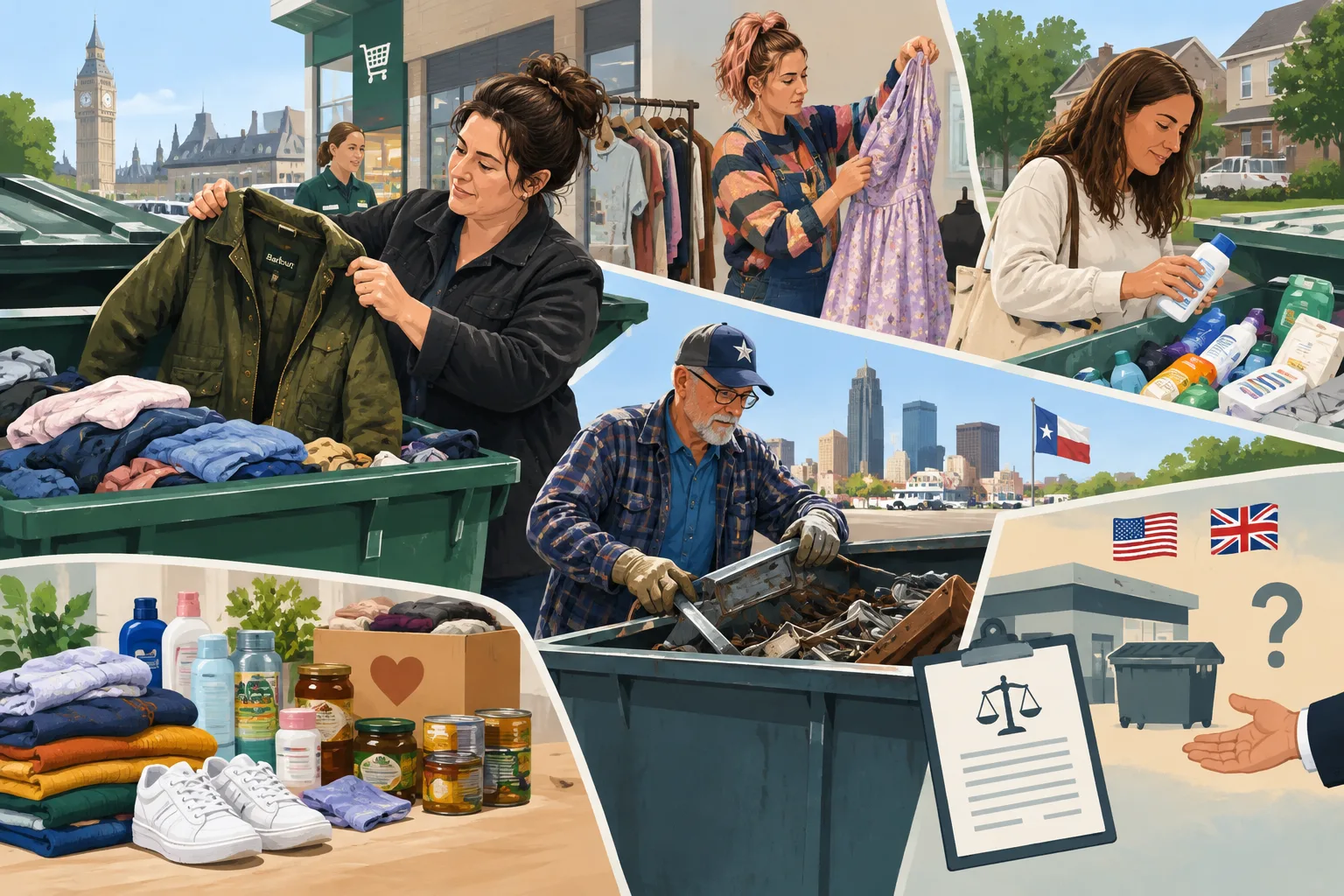
People searching commercial bins say discarded clothes, toiletries and household goods can cut costs, support charity or provide materials for creative projects. But the rules on taking items vary, and discarding something does not automatically make it free to take.
Review information is loading.
People in the UK and US are searching commercial bins for discarded clothes, toiletries and household goods, saying the finds help them save money, donate to charity or make items into something new.
Darryl Baker, a 39-year-old freelance journalist and mother of two from north London, asked supermarket staff for permission to take clothes she found beside recycling bins. During a six-month stretch this year, she estimates she saved hundreds of pounds and found enough for new wardrobes for her children. She also gives items away and sells some: a men’s Barbour jacket recently fetched £30.
The practice, known as dumpster diving, has different uses for the people interviewed by the BBC. In London, stylist Millie Diamond salvages textiles and clothing to refashion, sometimes selling the results. She estimates that one dress she found was worth £600.
In Essex, Charlotte Bayford says she has not bought shampoo for eight years, relying in part on toiletries left behind by students moving out for the summer. She gives some finds to charity and says sealed food is also among the items she takes.
Jeff Ferrell, a 72-year-old sociology professor emeritus in Fort Worth, Texas, says he searches bins daily. He sells scrap metal and some other finds, gives items away, and estimates the value of his discoveries at tens of thousands of dollars a year. He says scrap brings him about $150 (£110) every two weeks.
The legality depends on where the items are and who owns them. Ferrell says some US cities prohibit taking goods from bins, while a Fort Worth rule allows removal only when bins are on public land. In the UK, solicitor Sunjay Versani says prosecution is unlikely in many cases involving genuinely discarded goods, but warns that putting something in a bin does not automatically make it free to take. He advises asking the owner or business for permission when in doubt.
How do we know?
1 listed sources · explore evidence, limitations and provenance.
Sign in to give this article a thumbs up or down.
About this discussion and AI questions
Private test discussion. Comments are readers’ views and are not yet automatically fact-checked. Editing is available for 60 seconds after posting.
Sign in with a confirmed reader account and choose a username to read comments and participate.
Sorting applies to top-level comments; replies remain oldest first. New comments and likes can change the order. Refresh for the current ranking.
Loading comments…