Pancreatic cancer drug combination shows promise in early trial, but survival benefit unproven
Tumours became undetectable in a small proportion of patients given daraxonrasib with chemotherapy, but the trial did not compare the combination with chemotherapy alone.
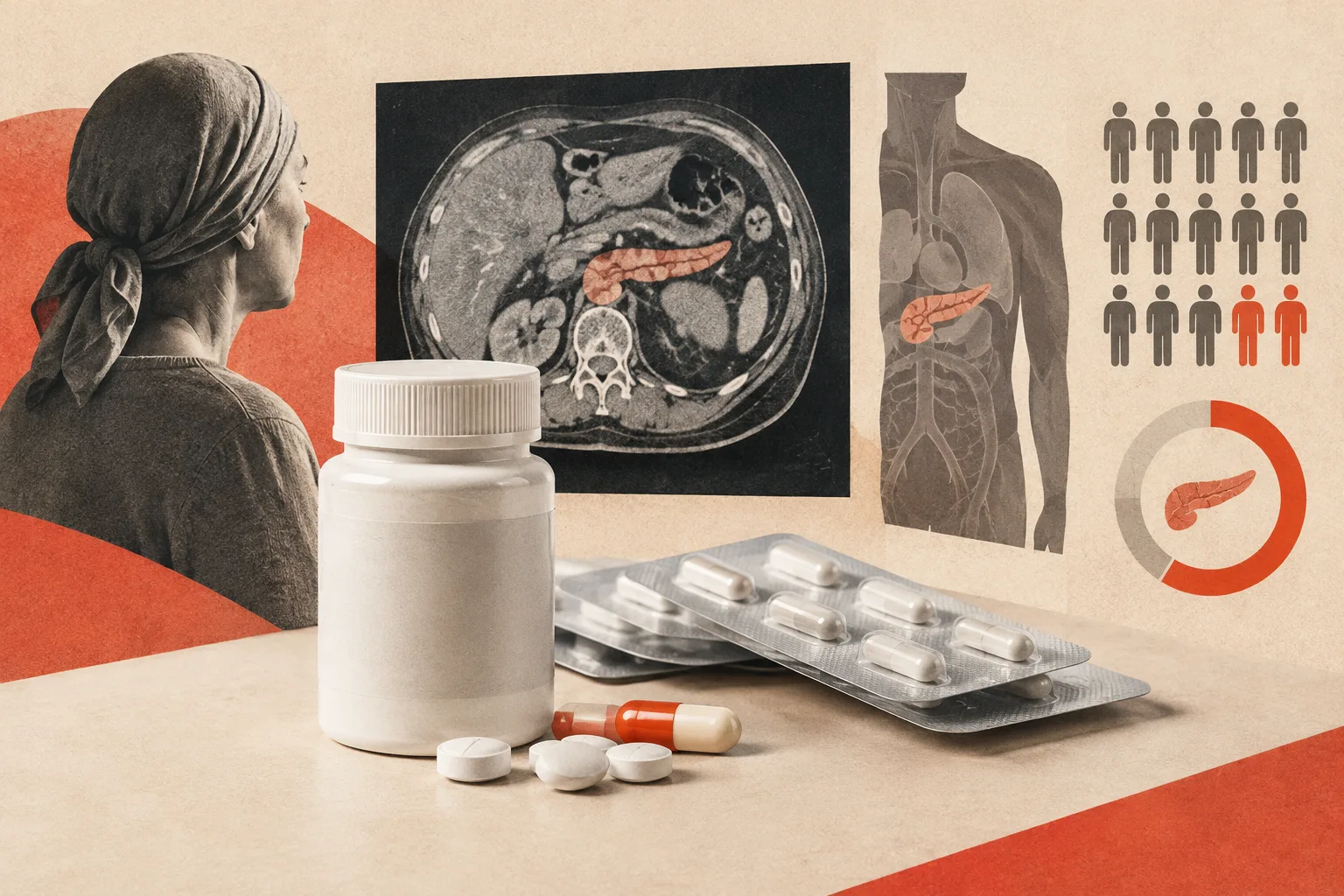
An early trial of a pancreatic cancer pill combined with chemotherapy has produced encouraging tumour responses, although it cannot yet show whether the combination helps patients live longer.
The study enrolled 61 people receiving their first treatment for pancreatic cancer that had spread to other parts of the body. They received the daily pill, daraxonrasib, alongside two chemotherapy drugs, gemcitabine and nab-paclitaxel, according to drugmaker and trial sponsor Revolution Medicines.
The company said tumours shrank or disappeared in 60.7% of patients. In 8.2%, or roughly one in 12, tumours were no longer detectable. The disease was controlled in 90.2%, a figure that also includes patients whose tumours did not disappear.
An undetectable tumour is not necessarily a cure. Dr Sam Godfrey of Cancer Research UK told the BBC: “Cancer can come back and even if scans show there is no sign of it, you don’t necessarily know you are cancer-free until more time has passed.”
The median follow-up was 18.3 months. The company reported median progression-free survival – the time patients lived without their cancer worsening – of 12.8 months, and estimated that 76.6% were alive after a year.
The trial had no group receiving chemotherapy alone. It therefore cannot establish whether adding daraxonrasib extends survival. A larger phase 3 trial is comparing the combination, and daraxonrasib on its own, with chemotherapy alone.
Common side effects included rash, diarrhoea, fatigue and reduced blood-cell counts, according to a statement from the European Organisation for Research and Treatment of Cancer. It said 5% of patients stopped treatment because of side effects linked to daraxonrasib.
The US Food and Drug Administration approved daraxonrasib in August for adults with metastatic pancreatic adenocarcinoma who have already received at least one systemic treatment, or who cannot receive a combination of systemic drugs. That approval is not a general approval of the new combination as a first treatment.
That decision followed a separate randomised trial in 500 previously treated patients. Median overall survival was 13.2 months with daraxonrasib alone and 6.7 months with standard chemotherapy, the FDA said. Those results do not establish the effect of adding the drug to chemotherapy as a first treatment.
Sign in to give this article a thumbs up or down.
From the discussion
Private test discussion. Comments are readers’ views and are not yet automatically fact-checked. Editing is available for 60 seconds after posting.
Sign in with a confirmed reader account and choose a username to read comments and participate.
Sorting applies to top-level comments; replies remain oldest first. New comments and likes can change the order. Refresh for the current ranking.
Loading comments…