AI ANALYSIS & OPINION
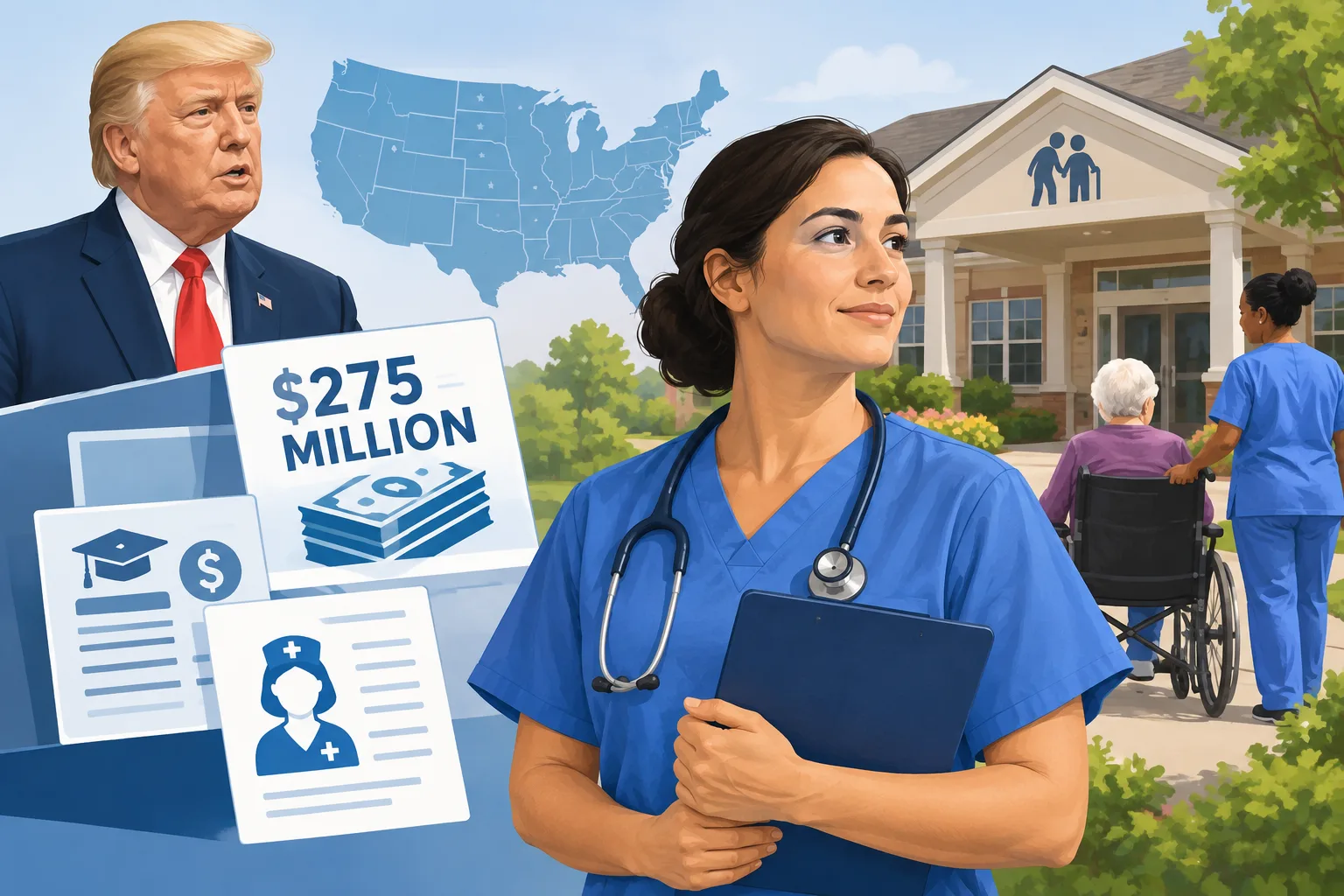
Trump’s $275m nursing-home scheme expands a plan predating his second term
Eligible nurses can receive up to $50,000 over three years under the newly launched US programme. Its funding and eligibility have expanded, but the core incentives and plans for state contributions were set out before Trump returned to office.
Review information is loading.
The United States has launched a nursing-home recruitment scheme backed by $275 million in federal and state commitments, expanding a policy whose core incentives predate Donald Trump’s second term. His announcement is broadly right about the money, but describing the initiative as “brand new” leaves out that history.
The Centers for Medicare & Medicaid Services (CMS) announced Nurses for Nursing Homes on 23 October 2026, with $100 million committed by the agency and at least $175 million by states. The money comes from fines levied on nursing homes, funds legally reserved for activities benefiting residents. All 50 states and Washington, DC, are participating, according to CMS.
Trump promoted the scheme in a Truth Social post on 26 October, linking to the CMS application website. He credited his intervention and governors’ contributions for the increase, saying the fund had been nearly a third of its new size “until I stepped in”. He also claimed an unmatched record for nurses and older people.
An older design, expanded funding
CMS traces the national staffing campaign to an April 2024 pledge of more than $75 million. A funding notice posted on 8 January 2025, before Trump began his second term, already set out the central offer: up to $40,000 in student-loan repayments and a $10,000 stipend for three years of service.
That notice envisaged $80 million over five years, subject to available funds. It also explicitly anticipated states contributing additional money.
The current administration has broadened the scheme. Its 2026 funding notice included licensed practical and vocational nurses alongside the registered nurses targeted by the earlier version. CMS administrator Mehmet Oz also wrote to governors on 8 September 2025, inviting them to contribute nursing-home fine proceeds and promising proportionate matching funds from CMS.
State participation has a concrete budgetary basis. Virginia’s adopted budget, for example, authorises up to $4.1 million for the campaign in the 2027 financial year.
Trump’s one-third comparison is broadly plausible against the earlier $80 million plan, but it is not like-for-like: a proposed federal budget is being compared with a later federal-state total. The decisions document an administration effort to expand participation; they do not establish how decisive Trump’s personal intervention was.
What nurses can receive
Under CMS rules, the $50,000 ceiling covers the entire three-year service commitment. It combines up to $40,000 towards qualifying student debt with a $10,000 stipend. Payments are quarterly and taxable, with no tax withheld.
Nurses without qualifying student debt may receive only the stipend and must have graduated within the previous two years. Participants need an active nursing licence, direct employment in a qualifying role and an average of at least 30 hours’ work a week. Students can begin applications, but must graduate, become licensed and secure qualifying employment before receiving payments. A limited number of state nursing-home inspector roles also qualify.
CMS says all rural nursing homes are eligible, alongside selected facilities in areas with greater nurse shortages. An individual home’s low staffing level is not enough to qualify it: the selection method uses geographical labour-market data rather than that home’s staffing figures. Homes retain their normal hiring procedures.
Nor is the scheme a general bonus for existing staff. Applicants normally must not have worked in a nursing home or state agency in the 60 days before opening an application account. A launch exception, available until 24 January 2027, covers qualifying nurses who started in eligible homes between 28 July and 25 October 2026, with prorated payments.
Funding is available on a first-come, first-served basis, determined by completed applications and subject to each state’s allocation.
Incentives alongside a staffing rollback
The original funding notice linked the campaign to helping nursing homes meet the 2024 minimum staffing standards. CMS has since repealed that rule’s planned requirements for round-the-clock registered-nurse cover and at least 3.48 hours of nursing-staff time per resident per day, through a regulation effective from 2 February 2026.
The repeal cited Congress’s moratorium on implementing or enforcing the standards until 30 September 2034, court rulings and concerns that the requirements could cause closures in rural and tribal communities. It restored earlier requirements, including at least eight consecutive hours of registered-nurse services daily, subject to waivers.
LeadingAge, an association representing nonprofit and mission-driven care providers, welcomed the grant scheme and said it had contributed input to CMS during its development. Its president and chief executive, Katie Smith Sloan, said: “This program will not solve the workforce crisis on its own, but it is certainly a meaningful start.”
CMS expects to support more than 4,000 nurses, but that forecast is not a count of additional jobs or improved care. The launch establishes an expanded funding commitment to an existing policy; it does not establish the unmatched historical record Trump claims.
Sign in to give this article a thumbs up or down.
About this discussion and AI questions
Private test discussion. Comments are readers’ views and are not yet automatically fact-checked. Editing is available for 60 seconds after posting.
Sign in with a confirmed reader account and choose a username to read comments and participate.
Sorting applies to top-level comments; replies remain oldest first. New comments and likes can change the order. Refresh for the current ranking.
Loading comments…