Widow seeks answers over firefighter’s cancer after Llwyneinion lagoon blaze
Jilska Williams believes exposure at a 1980 chemical waste fire may have contributed to her husband’s fatal lung cancer. No link has been established, and experts say identifying one would be difficult.
Review information is loading.
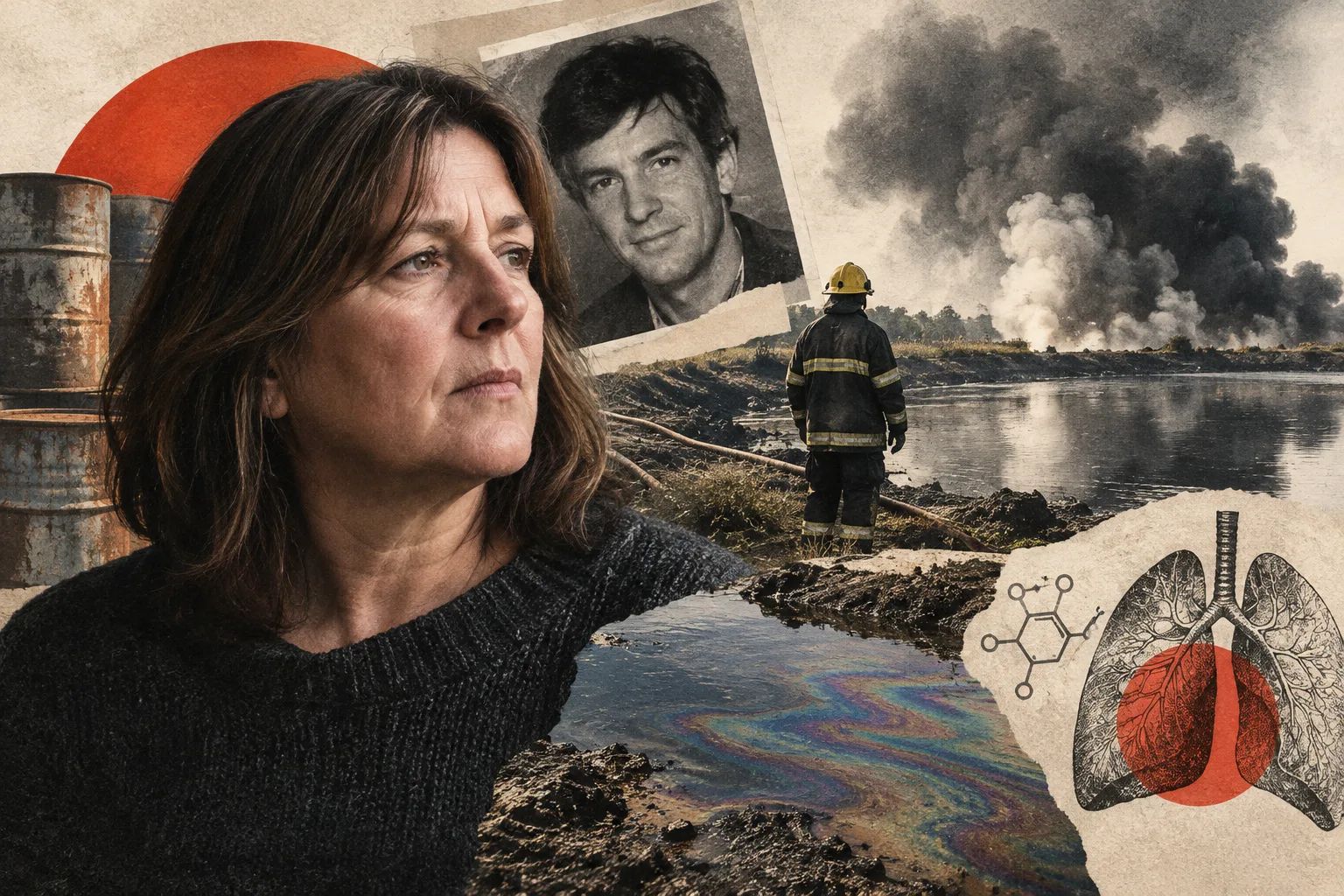
Steve Williams was one of about 60 firefighters sent to the burning chemical waste lagoon near Wrexham in August 1980. He slipped into the lagoon and was pulled out. His widow, Jilska, told the BBC she believes liquid he swallowed may have contributed to his cancer.
Williams was diagnosed with small-cell lung cancer in 1994 and died aged 39. Jilska said he had been checked in hospital after falling into the lagoon, given a tetanus injection and sent home.
Eleven firefighters or their families told the BBC they were concerned that the fire had affected their health. They raised concerns about cancers and miscarriages among firefighters’ partners. Their accounts do not establish whether illness or miscarriages were more frequent than expected, or whether the fire caused them.
Professor Anna Stec, an expert in fire chemistry and toxicity, said linking particular chemical exposures to later health problems was difficult, especially as firefighters could encounter many toxic substances throughout their careers. She nevertheless said further research into Llwyneinion was worthwhile.
The site was used to dump chemicals suspected to have included polychlorinated biphenyls, or PCBs, long-lasting industrial compounds. The team behind the BBC documentary *Buried with Michael Sheen* found elevated PCB levels in soil samples from an area open to the public beyond the fenced-off lagoon.
Some former firefighters want blood tests. Welsh Parliament member Marc Jones said Public Health Wales declined his request for PCB testing for surviving firefighters, Nation.Cymru reported. Jones argued testing could provide useful information for them.
In a general statement about communities near contaminated land, Public Health Wales said it did not recommend PCB blood testing as a public health measure. A test cannot show where or how someone was exposed, it said, and PCBs can also come from sources such as food and building materials. That limitation does not establish whether the firefighters were exposed or suffered harm.
Wrexham Council says contaminants are present at the site, although it does not meet the legal definition of contaminated land. It says it inspects the area and monitors streams and groundwater.
The firefighters were due to meet the Fire Brigades’ Union later this week, the BBC reported. Union representative Gareth Tovey said it was consulting scientists about possible support and would ask Welsh fire services about protections at historic waste sites.
Sign in to give this article a thumbs up or down.
From the discussion
Private test discussion. Comments are readers’ views and are not yet automatically fact-checked. Editing is available for 60 seconds after posting.
Sign in with a confirmed reader account and choose a username to read comments and participate.
Sorting applies to top-level comments; replies remain oldest first. New comments and likes can change the order. Refresh for the current ranking.
Loading comments…